The Jewish world has just experienced two terribly difficult years. At almost every celebration, at almost every communal moment, even when the occasion was genuinely joyful, we carried an awareness of what was happening elsewhere in the Jewish world. Something brittle. A grief that did not always have words. A vigilance that never fully switched off. Regardless of where each of us stands on the political spectrum, most, maybe all of us have had reasons to feel bruised, wounded, and exhausted by this era.
And so, as this Chanukah approached, I think many of us permitted ourselves a quiet hope. Not that we would forget October 7th. We did not want to forget it, and we should not forget it. But perhaps we might begin, slowly, to move beyond it in the only way one ever moves beyond trauma—not by erasing it, but by letting it heal, little by little. By living with its consequences with more steadiness. By learning and maturing from harsh lessons we actually never asked to learn.
This Chanukah, we told ourselves, might be the first celebration in over two years in which the shadow of that day and what followed it was not at the very top of our communal agenda. We allowed ourselves to imagine something close to a "normal" Festival of Lights.
And then, on the first night of Chanukah, there was the terror attack in Australia.
I do not need to describe it. You know. You have already felt what news like that does to a Jewish soul, and to a Jewish community. The sudden return of a familiar dread. The sense that the story offered us a resolution, only to pull it away. Like the cinematic trope where a plot seems complete, and the audience exhales, and then, in the final moments, the danger rises again. The false ending. The villain presumed gone, returning at the last moment.
Many in our South African Jewish community, myself included, have friends and relatives living in Australia. The bond between our communities is thick, woven of shared history and shared migration. And even when we do not have direct ties, the Jewish world is small enough that pain does not remain local. It travels. It arrives. It rearranges the atmosphere and the rhythm of our lives.
A festival dedicated to bringing light into the world leaves us with the spiritual question of this week: How do we respond when we offer light, and the world answers with darkness? When we extend a hand in celebration, and it is met by terror? When the very moment we are striking the match, trying to bring holiness into the world, devastation breaks in?
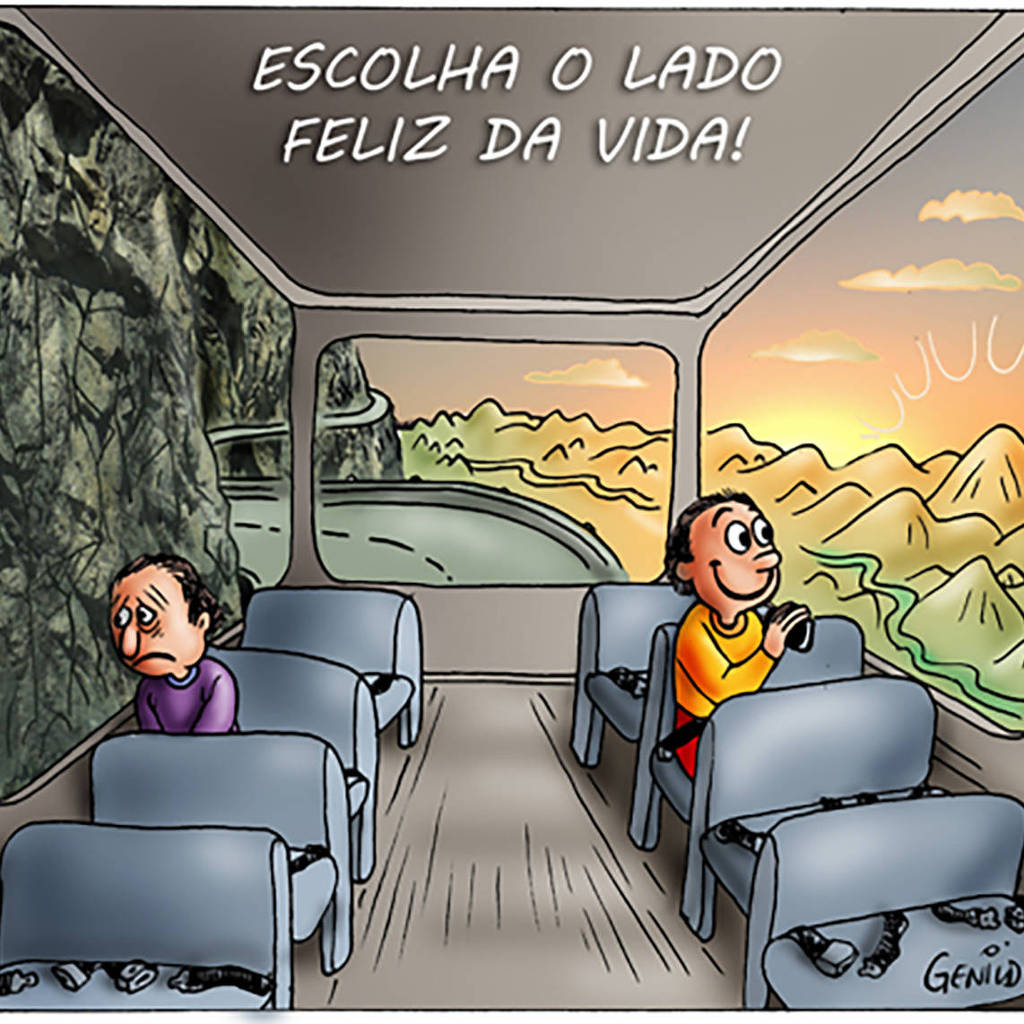
One response is ancient and human. Fight aggression with aggression. Meet darkness with a deeper, more aggressive darkness. Let fear harden into suspicion. Let grief harden into hatred. There is a part of the human heart that finds that response natural, even logical.
But Chanukah, at its best, asks us to consider a different kind of logic.
Chanukah may be the Jewish festival with the greatest range of interpretations and narratives. It can be told as a holiday of fighting for national pride, of spiritual resistance, of grit, of miracles, of religious freedom, of the complicated uses of power. We argue about it, but across all the arguments, one symbol has remained oddly steady: the light.
In the Northern Hemisphere, where the story began, Chanukah arrives in deep winter, when the nights are longest. There, the metaphor almost explains itself.
But here in the South, in South Africa, in Brazil, and indeed in Australia, we celebrate Chanukah in the summer. The days are long. The sun is strong. The world, in purely physical terms, is flooded with light.
And yet this week has taught us something painful and clarifying. Physical sunlight is not enough to banish darkness. You can have the longest day of the year, and still, in a single moment of terror, the world can feel pitch black. Just when our brothers and sisters in Australia were basking in the summer warmth, a cloud of darkness descended upon all of us. The sun can illuminate streets. It cannot always illuminate the human condition.
Which is why the light of the Chanukah candles are just a physical representation of something much deeper and meaningful, something moral and spiritual. A candle is not a floodlight. It does not conquer. It does not dominate. It does not humiliate. It simply insists on being light, and in doing so, it changes the terms of the darkness around it.
Parashat Miketz, in its own way, is also a meditation on what darkness can and cannot do.
The parashah opens with two words that sound, at first, like a simple timestamp: Vayehi miketz shnatayim yamim, "And it came to pass at the end of two full years." Two years.
In the narrative, Yosef has been stuck in an Egyptian dungeon. He has already endured the pit his brothers threw him into. He has already survived slavery. He has already been falsely accused and plunged into another pit. Now he has been in the dark, forgotten, waiting, for two full years.
We know that feeling. We know what it feels like to count the time since a trauma began. We know the feeling of miketz shnatayim yamim, of waiting for the end of two difficult years, hoping for a release, hoping for the light to break through the dungeon bars.
And then Pharaoh dreams.
Miketz places terror not only in external events, but in the mind itself. Pharaoh wakes up shaken, destabilised, not because something has happened outside, but because his interior world has staged a nightmare he cannot control. Dreams are like that. They do not ask permission. They do not obey the rules of daylight.
Trauma is like that too. It is not only what happened then. It is what continues to happen inside us afterwards. It can quiet down for a season, and then something breaks in, and suddenly the past feels present again. The nervous system does not always distinguish between memory and immediate danger.
So Miketz does not treat fear as something trivial. But it also does not treat fear as fate.
Pharaoh's advisors cannot interpret the dream in a way that steadies the world. Yosef is summoned. And Yosef refuses two temptations at once. He refuses denial, and he refuses panic.
He does not say, "It is nothing." And he also does not say, "Since it is frightening, your response must be frightening too."
Instead, Yosef does something counterintuitive. He takes fear and translates it into responsibility. He takes anxiety and turns it into preparation. He takes a nightmare and turns it into a plan to preserve life. He brings clarity. He brings sustenance. He turns the darkness of the dungeon into the light of salvation.
It would have been understandable if Yosef emerged bitter, vengeful, eager to add his own darkness to the darkness he inherited. But he does not. He listens. He clarifies. He brings order where there was confusion. He brings a kind of light, not only for himself, but for the society that imprisoned him.
And then, in one of the parashah's quieter transformations, Yosef is given a new name by Pharaoh, Tzafenat Paneach. The original Egyptian meaning is uncertain, but Targum Onkelos translates it as "the man unto whom hidden things are revealed“, a revealer of mysteries.
That is not a small description of Yosef's role in Miketz. He becomes the one who can stand in a room filled with fear and say: there is meaning here, and there is a path forward. He becomes, in the most literal sense, someone who reveals what is hidden.
Chanukah offers a parallel language for this.
The Talmud says that the ideal place for the Chanukah lights is outside, at the entrance to the home, or in the window, pirsumei nisa, publicising the miracle (Shabbat 21b). Chanukah is not meant to be only private comfort. It is meant to be visible.
And then the Talmud adds a sentence that feels like it was written with Jewish history in mind: u'v'sha'at ha-sakanah, "and in a time of danger", one places the chanukiah on the table inside, and that is sufficient (Shabbat 21b).
It is a remarkably honest concession. The tradition does not romanticise vulnerability. It does not demand recklessness. It recognises that there are moments in history when the street is not a neutral space. The terror attack in Australia has forced a sha'at hasakanah upon us. It has forced us to think about safety, perhaps to move our lights from the window to the table.
But here is the crucial point: We still light.
The location may change because of the danger, but the flame does not. The terrorists want us to stop lighting altogether. They want the fear to extinguish the mitzvah. They want to make the act of bringing light feel naïve, or dangerous, or pointless.
But we have a different "physics" in our tradition. It is a spiritual physics articulated by our sages, who taught: "Me'at min ha-or docheh harbeh min ha-choshech"—"A little light dispels a lot of darkness" (Chovot HaLevavot, Fifth Treatise on Devotion 5:13).
This is not just poetry; it is reality. Walk into a dark auditorium. Strike a single match. The darkness does not fight back. It simply vanishes, within the radius that the light creates. Darkness is not a force in the same way light is a force. Darkness is what happens when light is absent. It has no substance of its own.
Which means that the question Chanukah asks after a week like this is not whether darkness exists. It does. We know it does. We have felt it. The question is what we allow darkness to do to us.
Rav Kook taught: "The pure righteous do not complain of the dark, but increase the light; they do not complain of evil, but increase justice; they do not complain of heresy, but increase faith; they do not complain of ignorance, but increase wisdom."
I do not read that teaching as a demand for cheerfulness. I do not read it as a rebuke to grief. Rav Kook is not saying, "Do not feel what you feel." He is warning against a different danger: the danger of becoming fluent in darkness. The danger of letting darkness set our emotional vocabulary, our moral instincts, our imagination of what is possible. The danger of being so shaped by what we oppose that we begin to resemble it.
This is a truth echoed by Nelson Mandela, who knew intimately what it meant to sit in a prison cell and wait for justice. He taught us: "People must learn to hate, and if they can learn to hate, they can be taught to love, for love comes more naturally to the human heart than its opposite."
That is not a sentimental claim. It is a hard one. It suggests that our most corrosive emotions are not inevitable. It suggests that communities can decide what they will practise, what they will normalize, and what they will pass on to their children.
Tonight, have already lit six Chanukah candles. Six nights of refusing to let the season's darkness have the last word. Six nights of adding light, not once, but again and again.
And there are only two nights left.
That matters. Because by the sixth night, the chanukiah is no longer tentative. It is bright. It is harder to ignore. It takes up space. It becomes, whether we intended it or not, a statement. Not the statement that everything is fine, because it is not. Not the statement that we are untouched, because we are not. But the statement that something in us refuses to be extinguished.
Miketz offers one final key, and it comes through the names Yosef gives his children, born in the darkness of Egypt. He names the first Menashe, meaning: “God has made me forget my hardship.” And the second Ephraim, meaning: “God has made me fruitful in the land of my suffering.”
I think many of us longed for Menashe this year. A little forgetting. A little relief. A holiday that did not feel like a memorial service with candles. We wanted to reach “the end of two full years” and feel, at last, that the dungeon door had opened.
But after what happened on the first night in Australia, it may be that Menashe is not available to us yet. Not because we failed. Simply because the world reminded us, again, that Jewish history does not always grant us neat endings.
So perhaps the spiritual task, this year, is Ephraim, the one whose name means “God has made me fruitful in the land of my suffering.” Not to bless the space of suffering. Not to romanticise it. But to refuse to let it be the only space we inhabit. To discover, within the very place that has wounded us, a capacity to remain human, to remain tender, to remain more than our fear.
Two nights remain. The light will reach its fullness not because darkness has disappeared, but because it has not succeeded in converting us into its echo. And if we can hold onto that, even quietly, even imperfectly, then we will have honoured what both Miketz and Chanukah are asking of us: to remain, even in a valley of shadows, a people who still knows how to kindle light.
Shabbat Shalom and Chag Urim Sameach.